
The “Golden Dome for America” architecture is not just a U.S. technical program; it is a major strategic signal, an unprecedented industrial opportunity, and a product positioning and ecosystem challenge for European equipment manufacturers. In the context of multi-domain national defense shields, the real battle is being fought around integration into the U.S./NATO ecosystem and the ability to demonstrate specific added value—technological differentiation, sovereignty, and total cost of ownership. This article breaks down the key issues and proposes a roadmap for those who want to be key players rather than mere spectators.
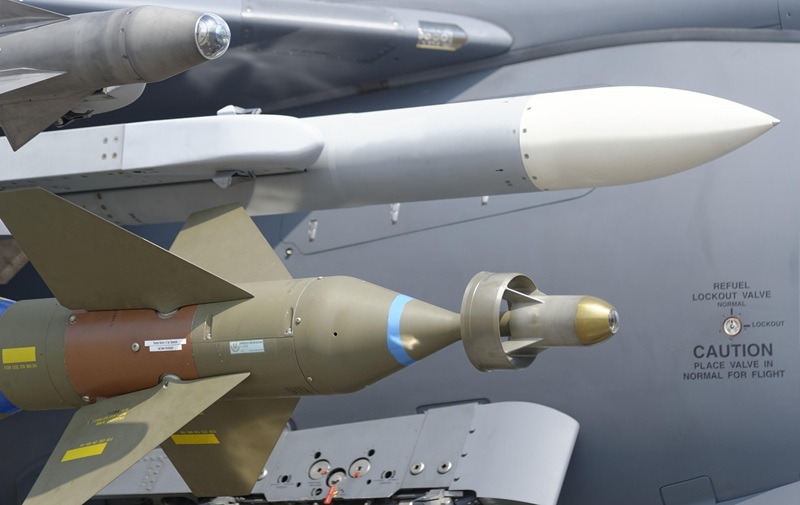
Golden Dome: beyond the shield, an architecture of power
Golden Dome aims to build a multi-layer “shield” that fuses land and naval radars, space-based sensors, C2 systems, and existing interceptors (THAAD, PAC-3, Aegis…) to create a real-time picture of the threat spectrum. The architecture relies on a central C2/BMC layer, resilient communications networks, and a proliferation of sensors across land, sea, air, and space, with an increasing focus on space-based sensors dedicated to detecting and tracking complex trajectories (hypersonic threats, glide vehicles).
This is not only a technological challenge, but one of data fusion and real-time decision-making in a contested environment. For European decision-makers, understanding Golden Dome means anticipating tomorrow’s requirements for their own defense architectures.
Where are the “entry points” for European equipment manufacturers?
U.S. and European programs are converging toward the same priorities: multi-sensor integration, NATO-interoperable C2/C3, resilient communications, and layered defense (exo- and endo-atmospheric). The EU is already funding European C2 suites, advanced sensors, and space-based early warning, with projects explicitly designed to avoid exclusive dependence on non-EU suppliers and to structure a credible European supply chain.
Product opportunities: radars and sensors
Golden Dome and its European counterparts are looking for “plug-and-fight” radars and sensors: open interfaces, standard data formats, multi-mission capabilities (air, missile, UAS), and native integration into existing C2 layers (IBCS, C2BMC, NATO architectures).
For European industrial players, this translates into needs for:
- Multifunction land and naval radars with beam agility and modes dedicated to hypersonic profiles.
- Long-range IR/EO sensors to complement detection chains, particularly in maritime and space layers (constellation payloads, pods, mission payloads).
- Passive sensors and EW capabilities for discreet detection and emitter localization, suited to architectures where the survivability of the detection chain becomes critical.
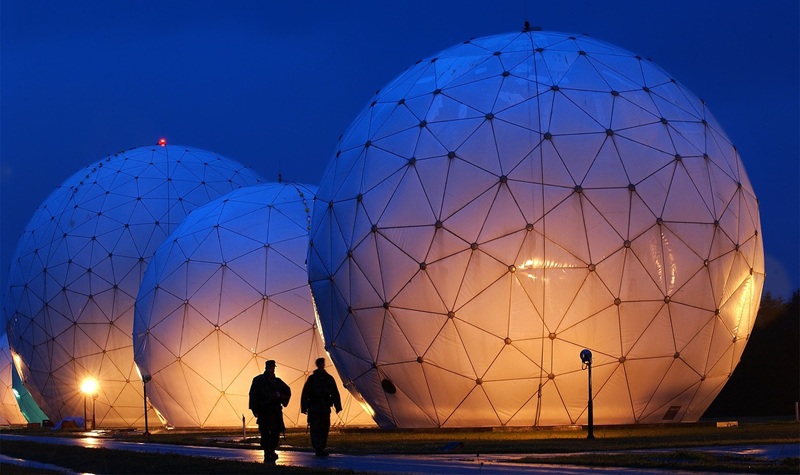
C2, data fusion, and data links: the real backbone of the fight
Golden Dome–type architectures rely on a C2/BMC “backbone” capable of fusing heterogeneous data streams in real time, feeding prioritization and resource-allocation algorithms, and operating in a highly contested environment (cyber threats, jamming, saturation).
Product opportunities for European players:
- Exportable multi-sensor data fusion modules (libraries, middleware, algorithms), NATO-certifiable, capable of ingesting European radars, space-based sensors, naval sensors, and partner ISR assets.
- Resilient data links (multi-bearer, anti-jam, LPI/LPD) interoperable with Link 16/22, while offering additional sovereign capabilities (cryptography, segmentation, mission-based QoS).
- Explainable and auditable battle management / decision-support tools, aligned with growing requirements for decision traceability and legal compliance in the use of force.
Why many European equipment manufacturers will stay on the sidelines
Let’s be clear: technical excellence is no longer enough. Many European equipment manufacturers, despite cutting-edge products, risk missing this strategic shift. Here are the classic pitfalls:
- The “perfect product” syndrome: technically outstanding products designed for a single national customer, without native integration into NATO demonstrators or multinational architectures. Mini-scenario: in several recent multi-sensor demonstrators, European solutions were technically selected but dropped at industrialization due to the lack of integration kits, interface documentation, and the ability to plug quickly into existing C2 chains.
- Underestimated ITAR/EAR dependency: critical components subject to U.S. regulations that block exports or integration into non-U.S. architectures, effectively limiting European sovereignty.
- Outdated marketing narratives: too much focus on “sensor X features” rather than on “measurable operational effects” (reduced reaction time, higher interception rates, increased resilience).
- Lack of defense-oriented product thinking: failing to understand that buyers expect offerings that can be defended through simulation and wargaming, with short time-to-integration and the ability to evolve without heavy redevelopment.
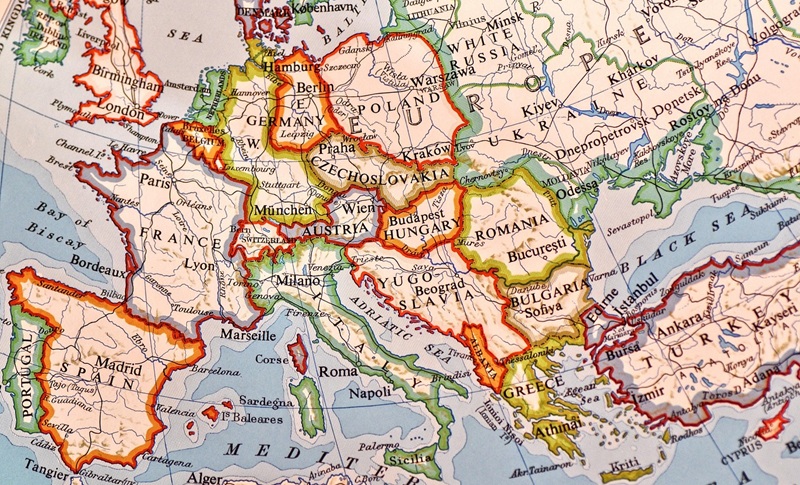
Strategy for a European equipment manufacturer: from the “box” to the “architecture building block”
To prevail, a paradigm shift is required: moving from selling a standalone product to delivering a multi-domain architecture building block.
- Bet on proven interoperability: active participation in multi-sensor demonstrators, integration into European C2 suites (EDF), NATO validation (FMN, STANAG). It is no longer about claiming interoperability, but about proving it in the field.
- Build an “architecture-ready” offering: deliver not only the radar, sensor, or radio, but also integration kits, data models, open APIs, simulators, and digital twins for testing, qualification, and wargaming. The objective is to minimize time-to-integration for the end customer.
- Provide clear roadmaps toward emerging threats (hypersonic weapons, saturation salvos, collaborative drones) and the ability to keep pace with evolving U.S./NATO doctrines. Anticipation is critical.
- Capitalize on the sovereignty and supply chain resilience argument: position the European industrial base as both a complement and a credible alternative to U.S. suppliers, with local anchoring, secured supply chains, and controlled ITAR/EAR exposure. This is the central dilemma: how to be NATO-compatible without becoming U.S.-dependent. The answer lies in the ability to offer sovereign solutions that integrate seamlessly.
Conclusion: the choice is now
The era of integrated national defense shields has arrived. European equipment manufacturers have a strategic window, but it will close quickly for those who fail to adapt.
The blunt question to ask is this: in five years, will your product be referenced as a critical component of a multi-domain NATO architecture… or will it remain an excellent national subsystem, marginal in large integrated shields?
The time for consensus is over. The time for strategic action has come. Your place in tomorrow’s defense is being decided today.
